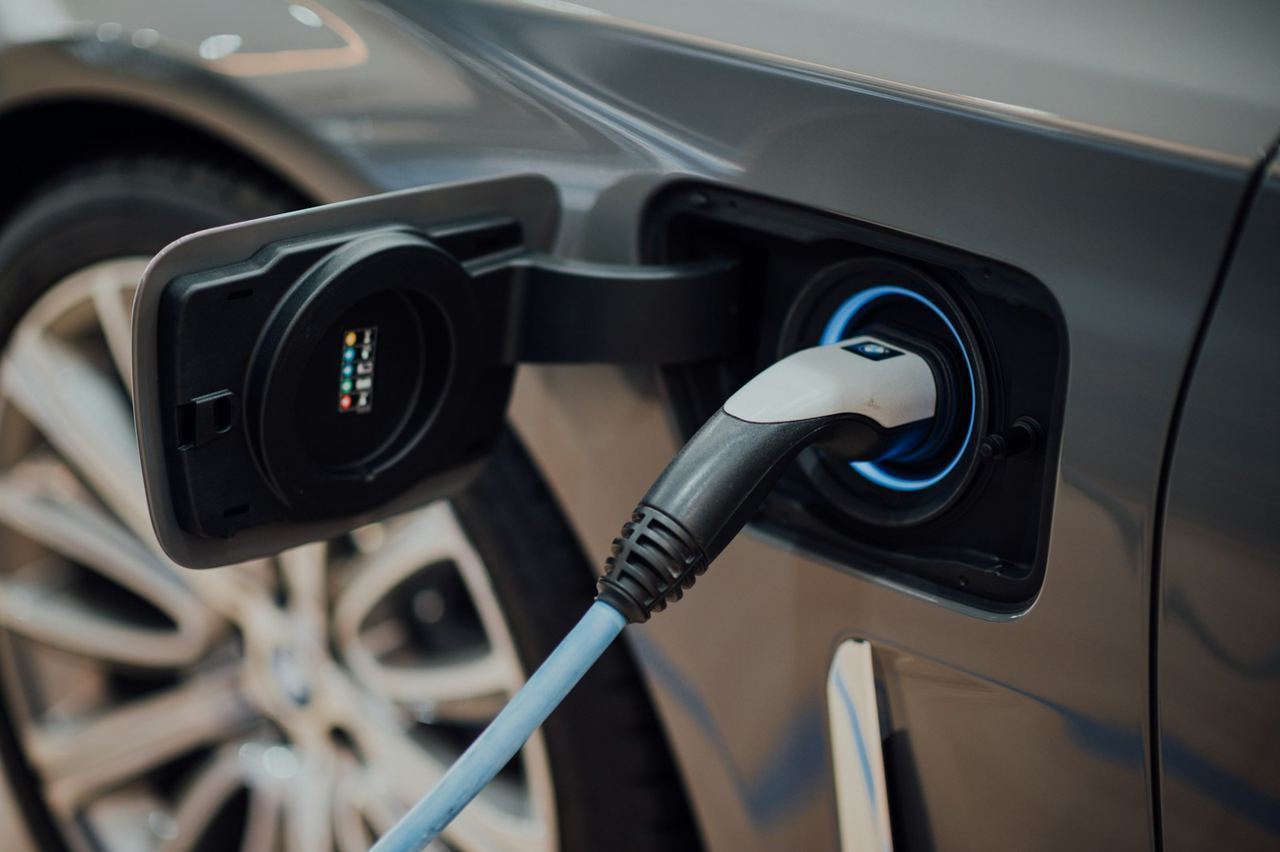
Yes — nearly every single-family home in Stockton and the Central Valley can support a Level 2 EV charger. A 200-amp panel almost always has room; a 100-amp panel often does too, sometimes with a load-management device or a lower-amperage charger. The real questions are what kind you install, where it goes, and whether your panel needs a load calculation first. This guide walks through the 5 steps an experienced electrician would take you through anyway, so you know what to ask and what to expect.
The short answer — almost certainly yes
For most homeowners, the question of whether an EV charger can be installed at home is a yes. What varies is the path to get there: some homes are already EV-ready and the install is a half-day with no surprises. Others need a load calculation, a panel discussion, or a creative routing solution. None of that is unusual, and none of it is a reason to put off the project.
Level 1 vs Level 2 — what you actually need
Every EV ships with a Level 1 (120V) charging cable. It plugs into a regular household outlet — the same kind your lamp uses. It works. It adds about 3-5 miles of range per hour, which is enough if you drive 25-30 miles a day and your car sits in the garage for 12+ hours overnight.
Level 2 charging uses a 240V circuit — the same kind of circuit your dryer or electric range uses. It adds 20-40 miles of range per hour. For most homeowners with an EV, Level 2 turns charging from an overnight thing you have to think about into a non-event: you plug in when you get home and roll out in the morning with a full battery.
Most home installs we see are Level 2. Level 1 is fine as a backup or for very low-mileage households.
Does your panel have the capacity? A homeowner-level check
A Level 2 charger pulls 30 to 50 amps continuously while charging. Your home's total service is usually 100 amps (older homes) or 200 amps (modern homes). The question is whether your existing load — AC, electric dryer, oven, fridge, hot water, lighting — leaves enough headroom for the charger.
A homeowner-level check:
- Open your panel door (don't open the panel itself — just the outer cover that exposes the breakers)
- Find the main breaker, usually at the top — it's labeled 100, 150, or 200
- Count what's already on big circuits: electric dryer (30A), electric range (40-50A), central AC (30-50A), electric water heater (30A), pool equipment, hot tub
- Ballpark: 100-amp service plus electric range plus electric dryer plus central AC is already getting close to safe headroom — adding a Level 2 charger on top needs a proper load calculation and possibly a panel upgrade or load management
- 200-amp service with normal residential loads almost certainly has room
This isn't a substitute for an actual load calculation — but it tells you whether the conversation with an electrician is going to be "let's just install it" or "let's look at your overall capacity first."
What an installer puts in (the components, in plain English)
A typical Level 2 install includes:
- A new 240V breaker in your panel, usually 40 or 50 amp
- A run of appropriately-sized wire from the panel to the charger location (usually the garage)
- Either a hardwired connection direct to the charger, or a NEMA 14-50 outlet (the standard 240V outlet that most EV chargers can plug into)
- The charger unit itself, mounted to the wall (Tesla Wall Connector, ChargePoint, Wallbox, Emporia, JuiceBox, and similar)
- A permit pulled with your local building department, and an inspection after install
The charger unit is usually a separate purchase from the install. Most homeowners pick the charger first based on their car and budget; the electrician sizes the install to match.
What if your panel doesn't have capacity? Three options
If a load calculation shows your panel can't comfortably handle a Level 2 circuit, you have options:
- Load management device (the cheapest path). A device like a DCC-12 or a smart EV charger with built-in load management monitors your home's total current draw and throttles the charger when other loads spike. This lets you safely add a Level 2 charger to a panel that's already near capacity. Trade-off: charging speed varies based on what else is running.
- Lower-amperage Level 2 charger. A 30-amp Level 2 charger still adds 18-25 miles of range per hour — plenty for most overnight charging — and uses less panel headroom than a 50-amp install. Many newer EVs charge fine at this rate.
- Panel upgrade. The right long-term move if you're also planning solar, a heat pump, an electric range, or another EV. A 100-amp to 200-amp upgrade is a bigger investment up front but removes the capacity ceiling for everything you might add over the next decade. Our panel upgrades page covers what that looks like.
A good electrician lays out all three options honestly, not just defaulting to the most expensive one.
Permits and inspection — what they involve
California requires a permit for new 240V circuits, and that includes EV charger installs. The electrician pulls the permit with your local building department (City of Stockton, City of Tracy, City of Modesto, Sacramento County for Elk Grove residents, etc.), does the install, and then schedules the inspection. The full permit-to-inspection cycle typically takes a couple of weeks; the actual install is usually a half-day. You can use the charger between install and inspection — it just needs to pass when the inspector comes.
A few reasons skipping the permit is a bad idea: it can void your homeowner's insurance if anything goes wrong on the circuit; it comes up at sale time when the buyer's inspector flags an undocumented 240V install; some EV-charger rebate programs require proof of a permitted install; and in California, unpermitted electrical work is a real liability for the homeowner. If a quote omits the permit, it's not actually cheaper — it's just deferred risk.
Choosing where the charger lives
A few factors:
- Closest path to the panel is usually cheapest. A 10-foot wire run is much less than a 60-foot wire run through finished walls and across an attic.
- Garage interior is the most common spot — convenient, weather-protected, and your car is already in there overnight.
- Garage exterior wall (charger facing the driveway) makes sense if you park in the driveway most nights or want to charge a second car outside.
- Carport or driveway installs work but need outdoor-rated wiring and a charger rated for outdoor use.
- Apartment / condo installs are possible but require landlord or HOA permission, and often a separate sub-meter for billing.
If you're undecided, the electrician's site visit usually clarifies what's easy versus what's expensive — short wire runs are short wire runs, and there's no negotiating with physics.
Rebates worth looking up
California EV-charger incentives shift periodically. Programs to check include:
- PG&E's EV-charger rebates (for PG&E customers in Stockton, Tracy, Lodi, Manteca, and most surrounding areas)
- MID's incentive programs (for Modesto Irrigation District customers in the City of Modesto)
- SMUD's EV-charger and home-electrification rebates (for SMUD customers in Elk Grove and most of Sacramento County)
- The federal 30C tax credit (covers 30% of install cost up to a cap, for qualifying installations in qualifying census tracts)
- Manufacturer rebates from the charger brands themselves (rotates with model releases)
A 5-minute look at your utility's website before scheduling the install can be worth a meaningful chunk of the project. An electrician who works in your area regularly will usually know which current programs apply.
One install, every EV brand
If you install a NEMA 14-50 outlet or a hardwired J1772-compatible Level 2 charger, it works for every modern EV. Tesla (with the included adapter on most models), Ford F-150 Lightning, Mustang Mach-E, Chevy Bolt and Blazer EV, Rivian R1T and R1S, Hyundai IONIQ models, Kia EVs, Polestar — all charge from a standard Level 2 install. You won't have to redo the wiring when you swap cars.
If you want to talk specifics for your home and your car, our partner electricians who do EV charger installation across Tracy, Elk Grove, Stockton, Modesto, and the rest of the Central Valley walk through this on the call before they show up.
Frequently Asked Questions
Can I install the charger myself if I'm handy?
240V circuits are explicitly not DIY electrical work in California — both for code/permit reasons and for safety. The charger itself you can sometimes mount on the wall as a separate physical task; the circuit (wire, breaker, outlet/hardwire connection) needs a licensed electrician. Skipping that step also creates problems at sale time and with insurance.
How long does the install take?
Most Level 2 installs are a half-day. Longer wire runs or panel work add time. The permit and inspection are usually scheduled within a week or two of the install, and you can use the charger in between.
Will my electric bill spike?
EV charging adds load — there's no avoiding that — but most California utilities have EV-specific time-of-use rate plans (cheap overnight rates) that bring the effective per-mile cost well below the equivalent in gasoline. PG&E, SMUD, and MID all offer some version. Worth setting up when you set up the charger.
What if I switch EV brands later?
A standard Level 2 install works for every modern EV. The only thing that's brand-specific is the charger unit itself (Tesla Wall Connector vs ChargePoint vs Wallbox vs others), and those can be swapped without redoing any wiring — just unmount the old one and mount the new one.
Can my apartment or condo support a Level 2 charger?
Sometimes, with HOA or landlord permission. California's "right to charge" laws give some legal backing to apartment EV owners pursuing chargers in their assigned parking spots, but the practical install requires coordinating with the building's electrical infrastructure and often a separate sub-meter so your utility usage is billed to you, not the building. It's more involved than a single-family install, but it is possible.
Do I need a 200-amp panel?
Not always. Many 100-amp panels can support a Level 2 charger with the right load calculation, especially if you don't have a stack of high-draw appliances already running. A load management device or a lower-amperage charger can also make a 100-amp panel work. A real load calc tells you which path makes sense.
Get one plain-English electrical tip a month.
No sales pitches. Just the kind of thing you'd want to know before it becomes a problem. Unsubscribe anytime.
The Can Do It Electrical Team
Written by the Can Do It Electrical team. Can Do It is a Stockton-based electrical referral service — we connect Central Valley homeowners and businesses with licensed, vetted local electricians and write about the electrical patterns we see in real Stockton-area jobs.