Outdoor Electrical Work: What's Different from Indoor
By The Can Do It Electrical Team· Published 2026-06-20· 7 min read
Outdoor electrical work follows tighter rules than indoor because it faces UV, moisture, temperature swings, and mechanical damage from lawnmowers and rodents. California code requires GFCI protection on every outdoor receptacle, weatherproof in-use covers, wet-rated boxes, UV-stable conduit, corrosion-resistant fasteners, and minimum burial depths (24 inches for direct-burial UF-B, 18 inches for PVC conduit, 6 inches for rigid metal). Pool and spa work adds a separate rulebook — NEC Article 680 — with equipotential bonding requirements. Here's what Stockton and Tracy homeowners should know before starting any exterior project.
Why outdoor is its own discipline
Indoor wiring lives in a climate-controlled, sealed environment. Outdoor wiring lives in the weather. In Stockton and Tracy that means UV strong enough to make standard PVC brittle in a few years, summer ambient temperatures that push conductor ratings, winter tule fog that condenses inside any box not properly sealed, and mechanical hazards from lawnmower blades to ground squirrels chewing insulation.
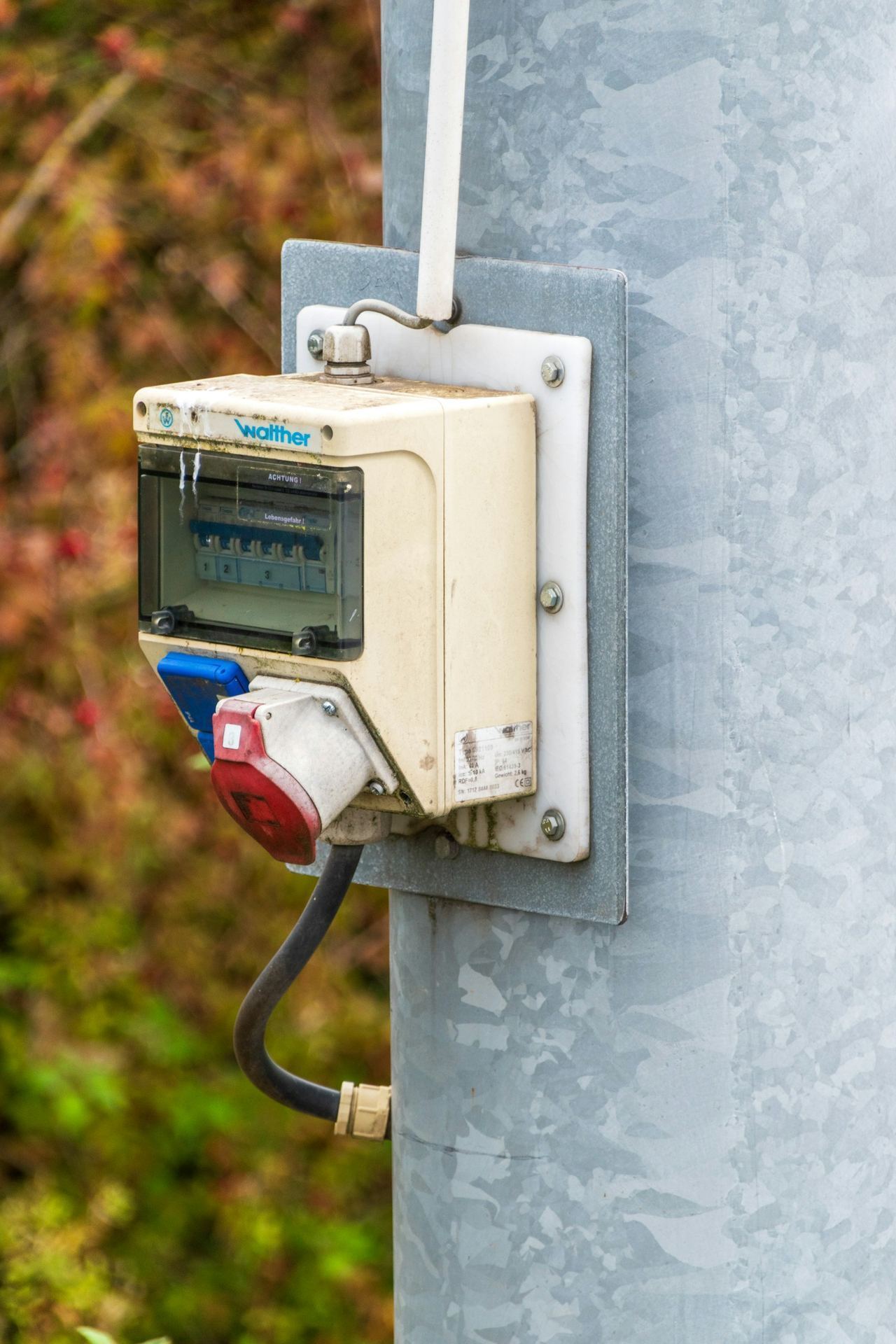
Outdoor circuits — landscape lighting, exterior outlets, EV chargers — live in weather 24/7. Different materials, different code rules.
UV exposure: standard gray PVC degrades; outdoor conduit must be UV-stable (sunlight-resistant Schedule 40/80) or EMT
Moisture: sprinklers, rain, fog, and humidity require wet-rated boxes and gasketed covers
Temperature swings: 40-degree daily swings cause expansion, contraction, and condensation
Mechanical damage: landscape crews, kids, pets, and rodents all attack exposed wiring
Corrosion: zinc hardware that lasts decades indoors can rust through in two seasons outside
The equipment that makes it legal
The NEC is specific about outdoor gear, and Stockton and Tracy inspectors enforce it. Every outdoor receptacle needs GFCI protection — no exceptions. For most exterior outlets you need an "in-use" or "extra-duty" cover — the bubble-style cover that closes over a plug while still energized, keeping the connection dry while a cord runs out the bottom. A flat flip-up cover is only legal where nothing will be plugged in for extended periods.
GFCI protection: required on every outdoor receptacle
Weatherproof "in-use" covers (extra-duty): mandatory for outlets used while exposed to weather
Wet-rated boxes: gasketed, with weep holes
UV-stable conduit: sunlight-resistant PVC, or EMT
Outdoor-rated wire: UF-B cable for direct burial, or THWN-2 in conduit
Corrosion-resistant fasteners: stainless or hot-dipped galvanized
Burial depth and underground runs
Anytime a circuit goes underground, depth becomes part of the conversation. Direct-burial UF-B has to go deeper because there is no conduit between it and a shovel. Wire run inside PVC conduit can be shallower. Inspectors measure before backfill.
Direct burial (UF-B cable): minimum 24 inches typical residential
PVC conduit: typically 18 inches
Rigid metal or intermediate metal conduit: 6 inches
Under driveways: 18 inches minimum regardless of method
Warning tape 12 inches above the run is recommended — saves future digging surprises
Pool and spa: a whole other rulebook
If a pool or spa is involved, the rules tighten dramatically. Article 680 of the NEC governs pool electrical — one of the strictest sections in the code because water plus electricity equals dead. Every metal part within 5 feet of the water has to be bonded together with a #8 copper conductor so everything sits at the same electrical potential. That is separate from grounding; it specifically prevents stray voltage from creating a shock path through the water. Pool work is one area where DIY is almost never the answer.
Equipotential bonding grid: required around the pool, including the deck
GFCI on all pool pump receptacles
Receptacle setbacks: minimum 6 feet from pool's inside wall
Most outdoor electrical projects in Stockton and Tracy require a permit. Adding a new circuit, running underground wire, installing an EV charger, hooking up a generator, or wiring pool equipment all need to be pulled and inspected. Like-for-like replacement of an existing outlet usually does not, but the moment you are adding load or extending a circuit, the city wants eyes on it. See our pages on outdoor outlets, landscape lighting, underground wiring, and EV charger installation.
Frequently Asked Questions
Can I just use an indoor outlet with a plastic cover if I'm careful?
No. Outdoor outlets must be GFCI-protected, installed in wet-rated boxes, and have weatherproof covers. It is both a code requirement and a real shock hazard.
How deep does the wire have to be buried?
Depends on protection. Direct-burial UF-B typically needs 24 inches. PVC conduit needs 18 inches. Rigid metal can go as shallow as 6 inches. Under driveways, 18 inches minimum regardless.
Do I need a permit to add an outdoor outlet?
In Stockton and Tracy, yes — adding a new circuit or extending one to a new outdoor location requires a permit and inspection.
Why does my outdoor GFCI keep tripping?
Most often it is moisture inside the box or cover, a damaged cord plugged into it, or a shared neutral. If it trips repeatedly, stop using it and have it diagnosed — nuisance tripping often signals a real fault.
Is Can Do It Electrical the company doing the work?
No. We are a referral and job-coordination service. We match you with vetted independent licensed electricians in our network and coordinate scheduling.
Written by the Can Do It Electrical team. Can Do It is a Stockton-based electrical referral service — we connect Central Valley homeowners and businesses with licensed, vetted local electricians and write about the electrical patterns we see in real Stockton-area jobs.
✅ Request received! We'll be in touch within a few hours. Thanks!
Can Do It Electrical is a referral and job coordination service. We are not a licensed electrical contractor. All electrical work is performed by independent licensed contractors. Contractor license numbers available upon request.