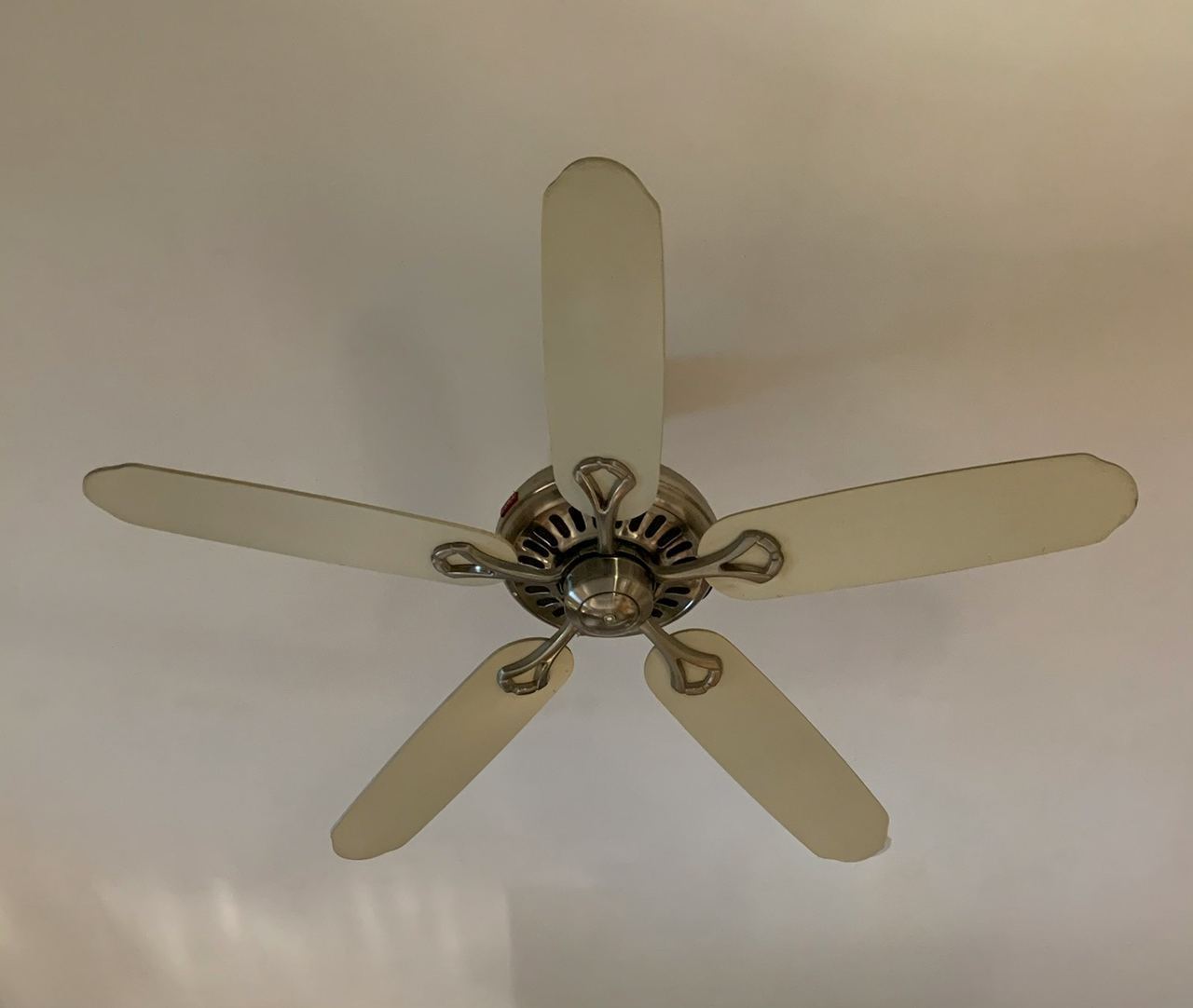
You can install a ceiling fan yourself if you're replacing an existing light fixture on an 8-foot flat ceiling — as long as you swap in a UL-listed, fan-rated electrical box (metal, with expanding brace bar, rated for at least 50 lbs static and 70 lbs dynamic). Skipping that box is the #1 install mistake and how 30-pound fans end up crashing onto coffee tables six months later. In Central Valley summers, a properly sized 52" fan can make a room feel 4–7°F cooler and let you raise the thermostat. This guide walks Stockton and Manteca homeowners through sizing, box requirements, and when to bring in a pro.
Why ceiling fans matter in the Central Valley
Our summers are long and brutal. The DOE estimates that a ceiling fan lets you raise your thermostat by about 4°F with no loss of comfort — in a Valley home where AC runs May through September, that is one of the highest-ROI efficiency upgrades possible. A $150 fan can pay for itself in a single summer. Most modern fans have a reverse switch that pulls cool air up and pushes warm air down along the walls in winter, knocking 5–10% off heating costs.
- Summer (downdraft / counter-clockwise): direct breeze, evaporative cooling
- Winter (updraft / clockwise, low speed): redistributes warm air without a draft
- Year-round: reduces AC and heater runtime, extends HVAC equipment life
The #1 install mistake: using a standard ceiling box
The most common and most dangerous DIY ceiling fan mistake. A standard ceiling junction box is rated only for a stationary light fixture up to about 50 lbs dead weight. A ceiling fan adds continuous vibration plus the dynamic load of spinning blades.
Mounting a fan to a non-rated box is how you end up with a 30-pound fan crashing onto a coffee table six months later. NEC 314.27(C) requires a UL-listed fan-rated box for any paddle fan installation. These are typically metal, have an expanding brace bar that wedges between joists, and are stamped "Acceptable for Fan Support."
- Standard plastic "old work" box: NOT fan-rated — must be replaced
- Pancake box stapled to a joist: NOT fan-rated — must be replaced
- Metal box with expanding brace bar marked "Fan Rated": correct
- Direct-mount metal box screwed to a 2x joist with lag screws: correct
Sizing, switching, and downrod length
Fan size should match the room. 44" for bedrooms up to 144 sq ft, 52" for living rooms and master bedrooms (144–225 sq ft), 54–60" for medium-to-large rooms, 60"+ for great rooms and vaulted spaces.
- Pull chain only — cheapest, but you walk under the fan every time
- Remote control — easy retrofit, no new wiring needed
- Wall control (hardwired) — requires a 3-wire feed from the switch box
- Smart wall switch (Lutron Caséta Fan, Leviton Decora Smart) — best of both worlds
Downrod length matters. For 8-foot ceilings, flush-mount. For 9-foot, a 6" downrod. For 10-foot, 12". Blades should sit 7–9 feet off the floor. Sloped ceilings need a sloped-ceiling adapter — most fans support up to 30° out of the box.
When to call a pro instead of DIYing
A simple light-to-fan swap on an 8-foot flat ceiling with an accessible attic is well within DIY range. Several scenarios push the job into pro territory fast.
- No existing electrical box in the ceiling (running new wire from a switch)
- Finished ceiling with no attic access above (drywall cutting and patching)
- Vaulted or cathedral ceiling (sloped adapter, longer downrod, scaffolding)
- Fan over 60" or heavier than 50 lbs (may require blocking between joists)
- Aluminum branch wiring (needs CO/ALR-rated connections)
- Adding a wall control where there is currently no switch loop
Can Do It Electrical is a referral and job-coordination service serving Stockton and Manteca. We connect homeowners with vetted independent licensed electricians who handle lighting and fan installation.
Frequently Asked Questions
Do I really need a fan-rated electrical box?
Yes. NEC 314.27(C) requires it, and standard boxes are not built to handle vibration of a spinning fan motor. Even if your current box feels solid, it will loosen over months of operation. Replacing the box is the most important part of any ceiling fan install.
Can I put a ceiling fan where there is no light fixture currently?
Yes, but it is a much bigger job than a swap. You need to run new wiring, cut an opening in the ceiling, install a fan-rated brace-bar box, and patch the drywall. Almost always a job for a licensed electrician.
What size fan do I need for my Central Valley living room?
For most standard living rooms in Stockton and Manteca tract homes (roughly 12x16 to 14x18), a 52" fan is the sweet spot. For larger great rooms with vaulted ceilings, go 60"+ with a longer downrod.
Is Can Do It Electrical a licensed contractor?
No — we are a referral and job-coordination service. We match Central Valley homeowners with independent properly licensed and insured electricians.
How much should a ceiling fan installation cost?
A straight light-to-fan swap on an 8-foot ceiling with an existing fan-rated box typically runs $150–$250 in labor. If the box needs to be replaced, add $75–$125. Vaulted ceilings or new wiring runs can push a job to $400–$700+.
Get one plain-English electrical tip a month.
No sales pitches. Just the kind of thing you'd want to know before it becomes a problem. Unsubscribe anytime.
The Can Do It Electrical Team
Written by the Can Do It Electrical team. Can Do It is a Stockton-based electrical referral service — we connect Central Valley homeowners and businesses with licensed, vetted local electricians and write about the electrical patterns we see in real Stockton-area jobs.