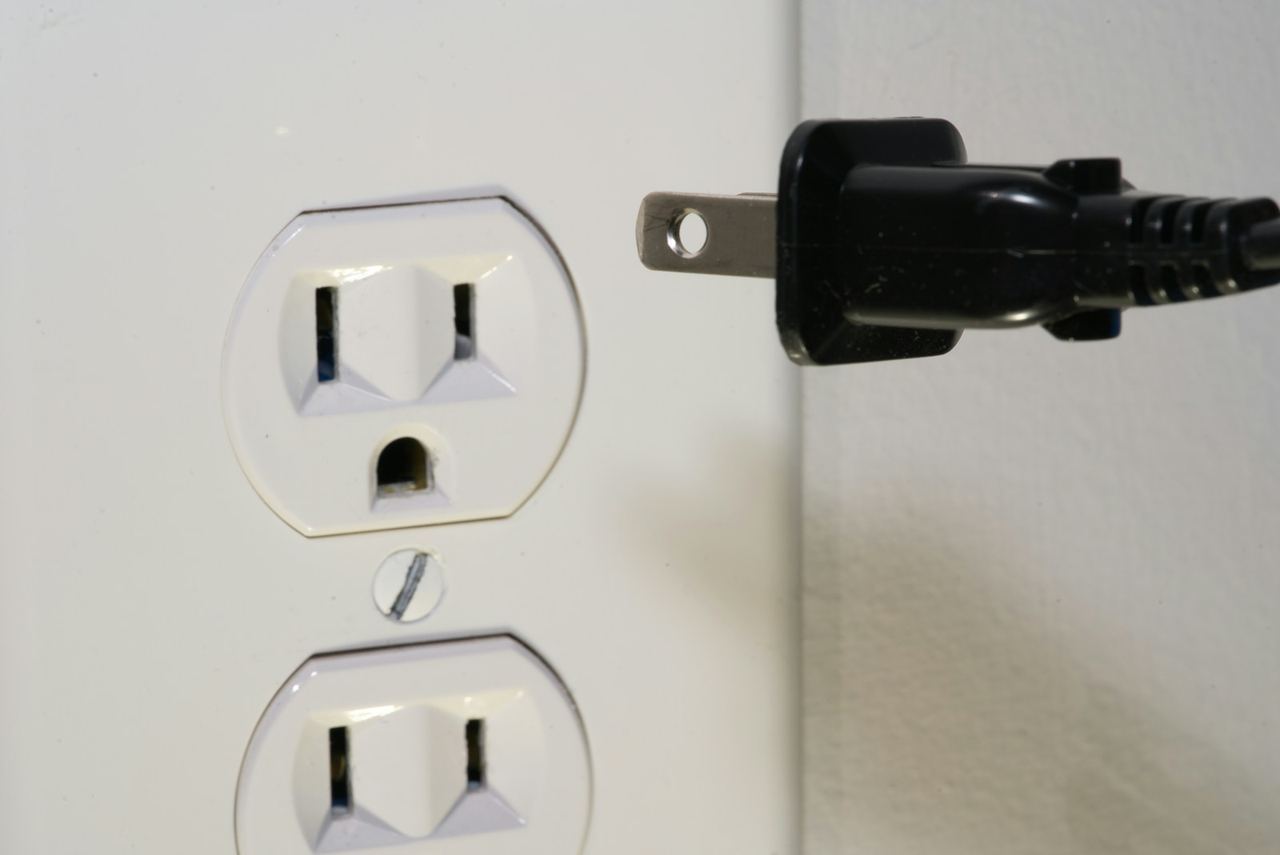
A slightly warm outlet during heavy use — space heater, hair dryer, microwave, portable AC — is often normal and fades within 30 minutes of unplugging. An outlet that is hot, warm with nothing plugged in, brown or scorched around the slots, smelling of hot plastic, or holding plugs loosely is a real fire risk and needs to stop being used immediately. The cause is almost always a failing internal connection or a worn contact. Here's the 5-step check every Stockton homeowner should run before deciding whether to keep using it or call an electrician.
Every electrical connection has a tiny amount of resistance, and every bit of current flowing through that resistance produces heat. Same principle that makes a toaster glow, just at a much smaller scale. Running a 1,500-watt space heater means roughly 12.5 amps moving through the brass contacts, the wire terminals, and the splice points inside the box. Even a perfectly healthy outlet sheds a small amount of that as warmth. A faceplate that feels barely warm after an hour of heavy use is usually within normal range. The problem starts when heat gets concentrated at one spot — that almost always means the connection there is worse than it should be.
Slight, even warmth across the whole faceplate while a high-draw appliance is actively running is generally not cause for alarm. Think space heaters, hair dryers, curling irons, portable AC units, microwaves, electric kettles, shop vacuums. If you unplug the appliance and the warmth fades over the next 15–30 minutes, the outlet is most likely fine.
Several signs move an outlet from "monitor it" to "stop using it." Warm or hot with nothing plugged in means current is leaking somewhere it should not, or a connection is arcing internally. Too hot to comfortably hold a finger on the faceplate is past the safe range — plastic starts to soften around 175°F and char around 350°F. Browning, yellowing, or black scorch marks around the slots mean the outlet has already been cooking itself. A faint smell of hot electronics, melted plastic, or fish (the smell of overheating PVC and wire insulation) is a serious warning. If plugs fall out, wiggle, or feel loose, the internal springs have failed and every use is producing arcing heat.
Four issues account for most warm-outlet calls. Backstabbed connections: many builder-grade outlets let the electrician push the wire into a hole rather than wrap it under the side screw. Those push-in connections rely on a tiny spring tab, and after a decade or two of thermal cycling they loosen, creating resistance and heat. Worn outlet contacts: the brass springs that grip your plug lose tension over time, especially on outlets used daily. Aluminum wiring at the terminals: if your home was built between roughly 1965 and 1973, it may have aluminum branch wiring that oxidizes at connection points. Over-amperage: too many devices on one circuit pushes everything harder than designed. Our electrical repairs and outlet replacement pages explain what a fix involves.
If the outlet is genuinely too warm, here is the order. Unplug whatever is connected. Put painter's tape, a sticky note, or an outlet cover over the slots so no one in the household plugs into it. If you know which breaker controls it, switch it off — this removes any fire risk while you wait for service. Then schedule an electrician. Do not keep using a warm outlet and hope it gets better; failing connections only get worse, and the failure mode is arcing — one of the leading causes of residential fires. If multiple outlets are warm, read our breakdown of the most common electrical fire causes or look into whole-home rewiring.
Describe your electrical job and where you're located. We'll match you with the right person and get back to you fast — usually same day.
No obligation. Takes 30 seconds.