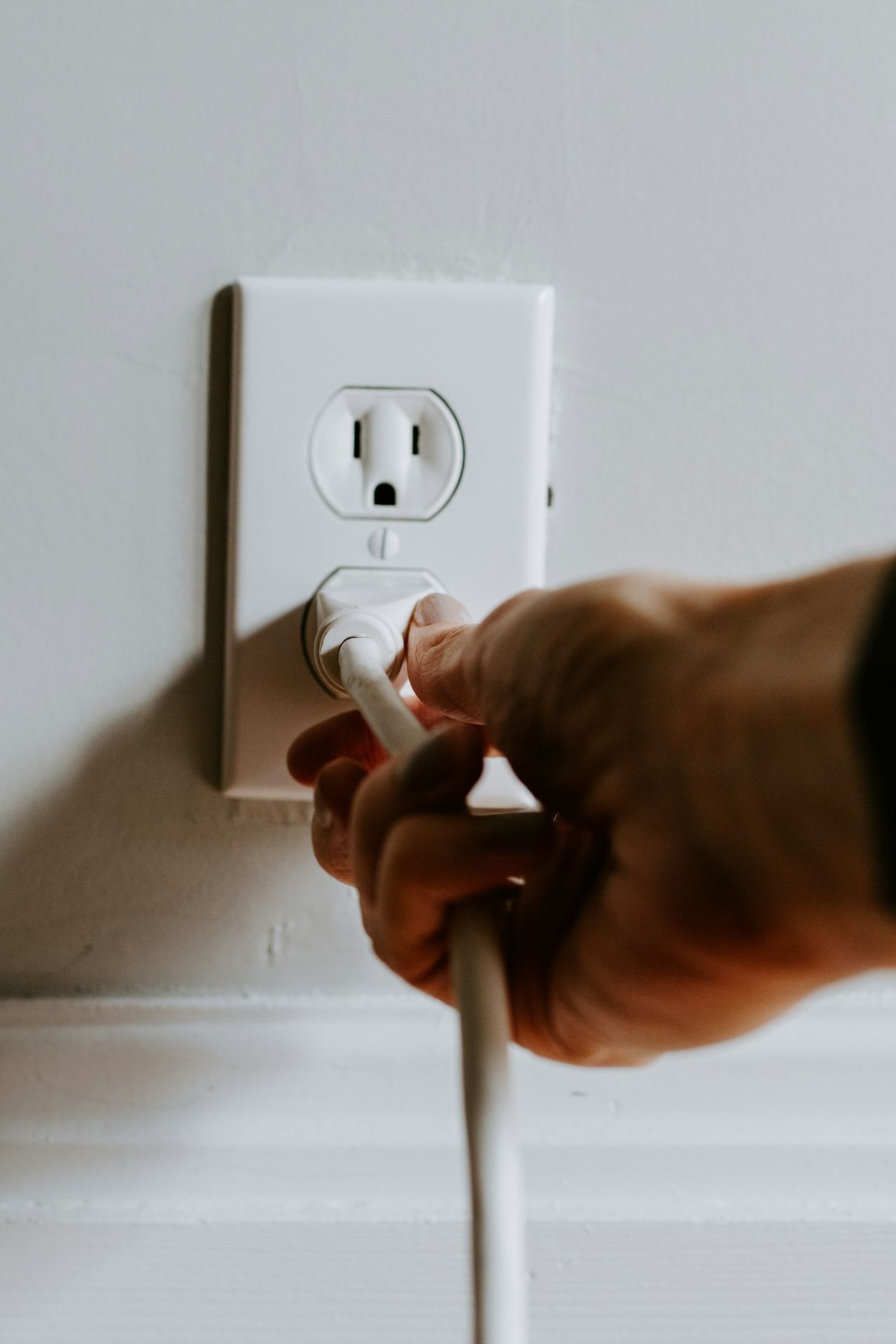
Adding a new outlet on an existing circuit is a short wire run and a shared breaker — often $150–$250 in a Stockton home. Adding a new circuit means a fresh wire from your panel to the outlet, its own breaker, a permit, and an inspection — typically $400–$1,200 or more once you factor in AFCI/GFCI breakers and drywall patching. The outlet on the wall looks identical either way; the cost lives behind the drywall. Here's when tapping an existing circuit is fine and when California code requires a new dedicated circuit.
New outlet vs new circuit: two very different jobs
Adding a new outlet on an existing circuit means the electrician taps into a nearby box, runs a short length of wire through the wall, and installs a new receptacle that shares power with whatever else is on that circuit. The cheap, fast version.
Adding a new circuit means running a fresh wire all the way back to your electrical panel, landing it on its own dedicated breaker. A much bigger project, with more labor, more material, and almost always a permit. The visible outlet at the end looks identical — but the work behind the wall is in a different league.
- New outlet on existing circuit: short wire run, shares the existing breaker, no new panel work.
- New circuit: fresh wire from panel to outlet, new breaker, permit and inspection required.
- The receptacle on the wall looks the same — the cost difference is everything behind it.
When tapping an existing circuit makes sense
If you just want one more outlet for a lamp, phone charger, or TV in a bedroom or living room, and there is an existing outlet on the same wall (or back-to-back on the other side), extending the circuit is usually fine. Low-draw electronics do not stress the wiring. An electrician we refer can check the existing circuit's load and confirm it has headroom. See our outlets and switches page.
- Bedroom or living room outlet for low-draw electronics
- Existing outlet nearby with capacity to spare
- No code requirement that the use be on its own circuit
When a new dedicated circuit is required
Some uses cannot legally or safely share a circuit. Modern code requires dedicated circuits for many high-draw or fixed appliances, and certain rooms (kitchens, laundry, garages) have specific circuit rules. Full breakdown on our dedicated circuit article.
- EV chargers (Level 2 chargers pull 30–50A continuously)
- Window AC units, space heaters, or anything over ~1,500W sustained
- Kitchen small-appliance circuits and refrigerator circuits
- Laundry room — washer and dryer typically need separate circuits
- Garage workshop tools: table saws, compressors, welders
- Microwaves, dishwashers, garbage disposals
What a new circuit run actually involves
A new circuit is not just "run a wire." It is a sequence of steps that each take real time and skill. Routing is the biggest variable. A run from a garage-mounted panel through unfinished attic might take an hour. The same distance fished through finished walls, insulation, fire blocks, and around HVAC ducts can take most of a day.
- Verify panel has a free breaker slot — if not, see panel upgrades
- Route the new wire (attic, crawl space, or fished through finished walls)
- Cut in a new box at the destination and pull wire through
- Install the breaker, receptacle, and test
- Pull a permit and schedule inspection
- Patch drywall, lath-and-plaster, or stucco if the path required cuts
Why "$200 to add an outlet" usually is not real
Online estimators love $150–$250 for "adding an outlet" — only realistic for tap an existing nearby box, short run, surface-accessible, no patching. The moment you need a new circuit, the math changes.
Wire alone for a 50-foot 12-gauge run can be $40–$80. A breaker is $15–$60 depending on whether it needs AFCI or GFCI. Permit fees add cost. Plus actual labor of routing, cutting, fishing, and patching. A realistic new-circuit job in a finished Stockton home is typically $400–$1,200+ depending on distance and finish work — see wiring and rewiring.
- Material: wire, breaker (AFCI/GFCI), box, receptacle, wire nuts, staples
- Labor: routing time scales with distance and wall access
- Permit and inspection fees from the City of Stockton
- Patch and paint if walls had to be opened
Frequently Asked Questions
Does Can Do It Electrical do the wiring work directly?
No. Can Do It Electrical is a referral and job-coordination service based in
Stockton. We connect homeowners with independent licensed electricians who perform the actual work.
Do I really need a permit just to add one circuit?
Yes. In California, new circuits and most new wiring require a permit and inspection. Skipping it can cause insurance problems if there is ever a fire, and shows up during a future home sale as unpermitted work.
Can I add the outlet myself and save money?
You technically can on your own property, but DIY electrical creates real risks: wrong wire gauge, missing AFCI/GFCI protection, insurance complications, and resale disclosure issues. Code has changed significantly in recent cycles.
How long does adding a new circuit take?
A straightforward run from a garage panel through unfinished attic is often a half-day job. A run through finished walls with patching, or one requiring a panel upgrade first, can stretch across multiple days plus the inspection wait.
What if my panel is already full?
You have two options: a tandem or skinny breaker (only if your panel allows them), or a panel upgrade. An electrician can tell you quickly which applies.
Get one plain-English electrical tip a month.
No sales pitches. Just the kind of thing you'd want to know before it becomes a problem. Unsubscribe anytime.
The Can Do It Electrical Team
Written by the Can Do It Electrical team. Can Do It is a Stockton-based electrical referral service — we connect Central Valley homeowners and businesses with licensed, vetted local electricians and write about the electrical patterns we see in real Stockton-area jobs.